
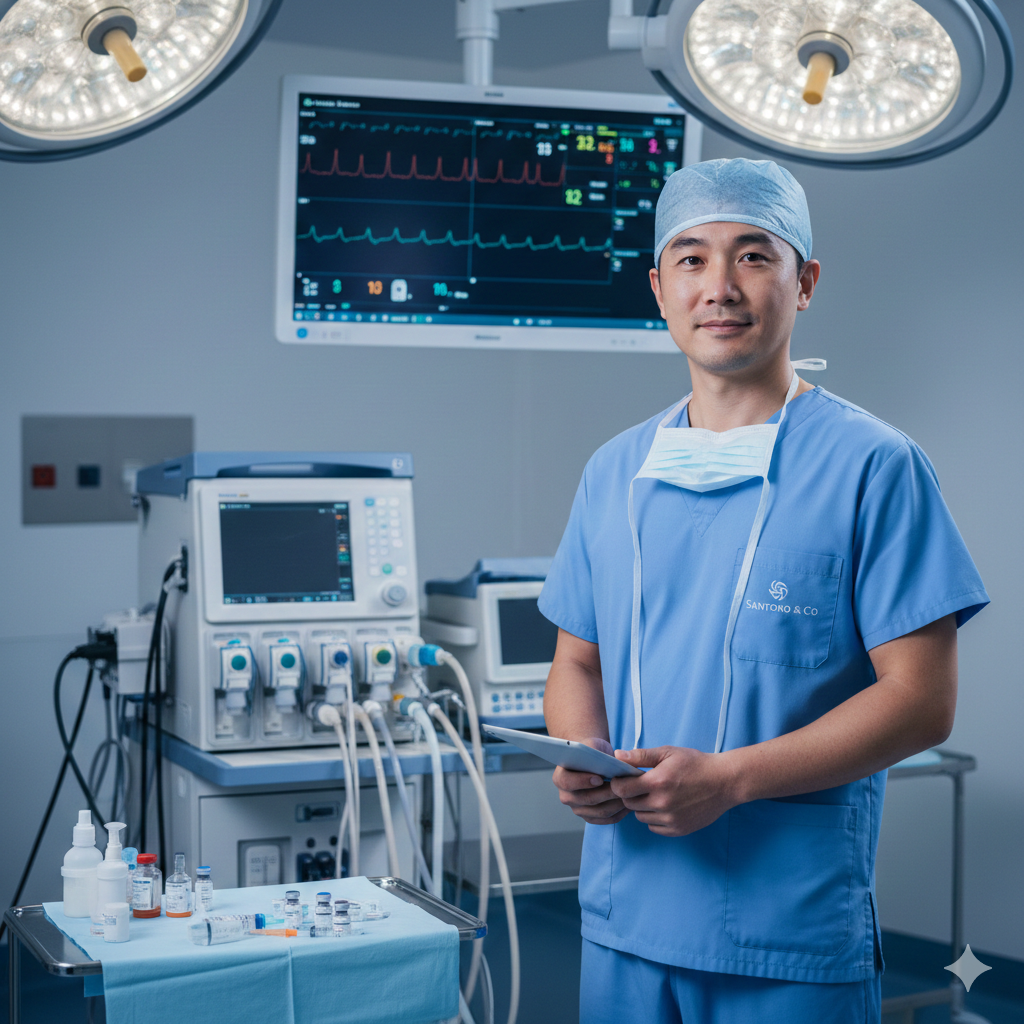
Specialist Tax & Accounting for Anaesthetists in Australia
Navigating the complexities of multi-hospital billings, private practice structures, and ANZCA-specific deductions.
How we can help you
Billing Complexity
The Challenge: You juggle RCTIs from multiple private hospitals, public health appointments, and ad-hoc surgical groups. Tracking GST and reconciling varied income streams is a full-time job.
The Santoro Solution: We automate your medical billing reconciliation and manage your BAS, ensuring every dollar is accounted for without you lifting a finger.
Service Trust Structures
The Challenge: High-earning anaesthetists are often over-taxed because they lack a robust structure. Asset protection is a secondary thought until it's too late.
The Santoro Solution: We implement "Service Entity" models and Discretionary Trusts that protect your personal wealth while legally minimising your tax brackets.
Payroll Tax Risk
The Challenge: Recent rulings (Thomas & Naaz) have shifted the goalposts. Many service fee arrangements are now being flagged for massive backdated payroll tax.
The Santoro Solution: We perform "Contract Health Checks" on your service agreements to ensure they meet 2026 compliance standards and minimise audit risk.
Specialist Tax Deductions for Anaesthetists
Unlike general tax agents, we know the "hidden" claims specific to your theatre work.
College & Board Fees: Full claims for ANZCA membership, AHPRA registration, and ASA subscriptions.
Professional Indemnity: 100% deductible premiums for MIPS, Avant, or MDA National.
Theatre Equipment: Immediate write-off or depreciation for Laryngoscopes, specialized ultrasound probes, and surgical loupes.
The "Multiple Worksite" Rule: We maximise your car claims for travel between separate hospitals (e.g., a morning list at Royal North Shore followed by an afternoon at Mater Hospital).
Advanced Training: Deductions for EMAC or ALS2 courses, and travel for international anaesthesia congresses.
Testimonials
Frequently Asked Questions
Still have questions? Take a look at the FAQ or reach out anytime. If you’re feeling ready, go ahead and apply.
-
es. While travel from home to your first hospital is generally non-deductible, travel between two separate workplaces (e.g., from a morning list at a public hospital to an afternoon private list) is 100% claimable. We recommend keeping a 12-week logbook to maximise your motor vehicle "cents per kilometre" or "actual cost" deduction..
-
Absolutely. Any expenses incurred to maintain or improve your current skills as an Anaesthetist—including ANZCA college fees, AHPRA registration, and international conferences—are deductible. This includes flights, accommodation, and a portion of meals if you are required to stay away from home overnight for professional development.
-
This is a critical area for 2026. The ATO and State Revenue offices are increasingly viewing service fee arrangements as "relevant contracts" for payroll tax. We perform a 'Contract Health Check' to ensure your billing is handled in your name and your service agreement is structured to minimise the risk of being deemed an employee for payroll tax purposes.
-
Yes. For equipment costing $300 or less (like certain stethoscopes or diagnostic tools), you can claim an immediate deduction. For high-value assets like portable ultrasound machines or monitors, we use "Capital Allowance" rules to depreciate the cost over the item's effective life, significantly reducing your taxable income over several years.
-
For high-earning anaesthetists (FANZCA), a hybrid structure is often best. A Family Trust allows you to distribute income to lower-tax-bracket family members, while a Bucket Company can "cap" your tax rate at 25% or 30% for any surplus income you wish to reinvest rather than draw as personal salary.
Get in Touch
Click the button below to get in contact with us!